

See the video version of this article on our YouTube channel.
You just brought home your new Red Fox Labrador puppy and now you are wondering what the best food is to feed them. Getting nutrition right from the beginning matters. Starting a puppy on the wrong diet can lead to avoidable and often costly health issues down the road. Our goal is to help you avoid that and give your puppy the best possible start.
Choosing a puppy food can feel overwhelming. It is one of the most common questions we get from new puppy families. There are hundreds of dog foods on the market, all claiming to be the best. Unless you are a breeder, veterinarian, or animal nutritionist, it can be hard to know which one is actually right for your puppy.
If you spend any time researching online, you will quickly find strong opinions about puppy diets. You may also come across what we like to call “Hollywood diets” for dogs. Raw diets and grain free diets are often heavily promoted, but we will explain why those may not be the best choice for a growing Labrador puppy. We will also share our top three recommended puppy food brands, so be sure to read through to the end.
None of the information in this article is sponsored. We are not compensated by any of the brands mentioned. These recommendations are based solely on our experience and opinions as a long time Labrador breeder.
AAFCO Labeling
The first thing you should look for when choosing a puppy food is whether the manufacturer follows AAFCO standards. AAFCO stands for the Association of American Feed Control Officials, a nonprofit organization that establishes guidelines and testing protocols for animal food, including dog food.
AAFCO does not certify or test foods directly, and they do not endorse specific brands. Instead, they create voluntary standards for pet food labeling, nutrition, and testing. Most state regulators have adopted these standards, and many reputable pet food brands follow them. You will often see a reference to AAFCO on the food label or on the manufacturer’s website. This is one of the first indicators that the food is coming from a reputable source.
Be cautious with homemade dog foods or treats purchased online or at local farmers markets. These products often do not adhere to AAFCO standards, which means you may not truly know what nutrients are included or whether the food is properly balanced.
Nutrient Profiles for Labrador Puppy Food
The next thing to consider is the nutrient profile of the food and where those nutrients come from. Labrador puppies and other large breed dogs require higher levels of protein along with specific vitamins and minerals while their skeletal systems develop. For Labradors, full skeletal maturity typically occurs between 18 and 24 months of age.
A quality Labrador puppy food should contain roughly 28 to 30 percent protein from animal based sources such as chicken or lamb. Fat content should be at least 18 percent, with carbohydrates around 22 percent. Proper nutrition helps regulate growth rate, and growing too quickly or too slowly can contribute to joint and bone problems later in life.
Grain Free and Raw Diets for Labradors
Earlier we mentioned grain free and raw diets, so let’s talk about those briefly. Grain free diets are often popular with people who follow similar diets themselves, but that does not necessarily make them a good choice for dogs.
There are published veterinary studies that associate grain free diets with cardiac issues in large breed dogs. Because of this, we do not recommend grain free diets for our Labrador puppies. Unless your puppy has a diagnosed grain allergy, it is best to avoid the current grain free trend.
Raw diets also come with risks, especially for young puppies. Raw foods carry a higher chance of food borne pathogens such as salmonella. Since puppies do not yet have fully developed immune systems, exposure to these bacteria can have serious consequences. For this reason, we do not recommend raw diets for puppies.
We are more open to raw foods once dogs are over a year old, and our adult dogs do receive raw foods occasionally. Even then, we are very careful about food safety for both our dogs and our family. For us, raw foods are an occasional treat rather than a primary diet.
Price Per Pound of Puppy Food
The final consideration when choosing a puppy food is cost. Feeding Labradors can get expensive, especially if you have multiple dogs. A helpful way to compare foods is by calculating the price per pound rather than just looking at the price of the bag.
Puppy food has not been immune to shrinkflation, where the price stays the same but the bag contains less food. We researched 28 popular puppy foods and calculated the price per pound for each. The link to that report is below. It is free to download and allows you to see where your current food falls on the list. Cost should absolutely be part of your decision making process.
Download 2022 Labrador Puppy Food Review List
Download our PDF file that contains our top brand picks and a price per pound comparison of 28 popular puppy foods. List updated September 2022.
Top 3 Labrador Puppy Food Recommendations
We promised to share our top three puppy food brands based on our experience as breeders, and here they are.
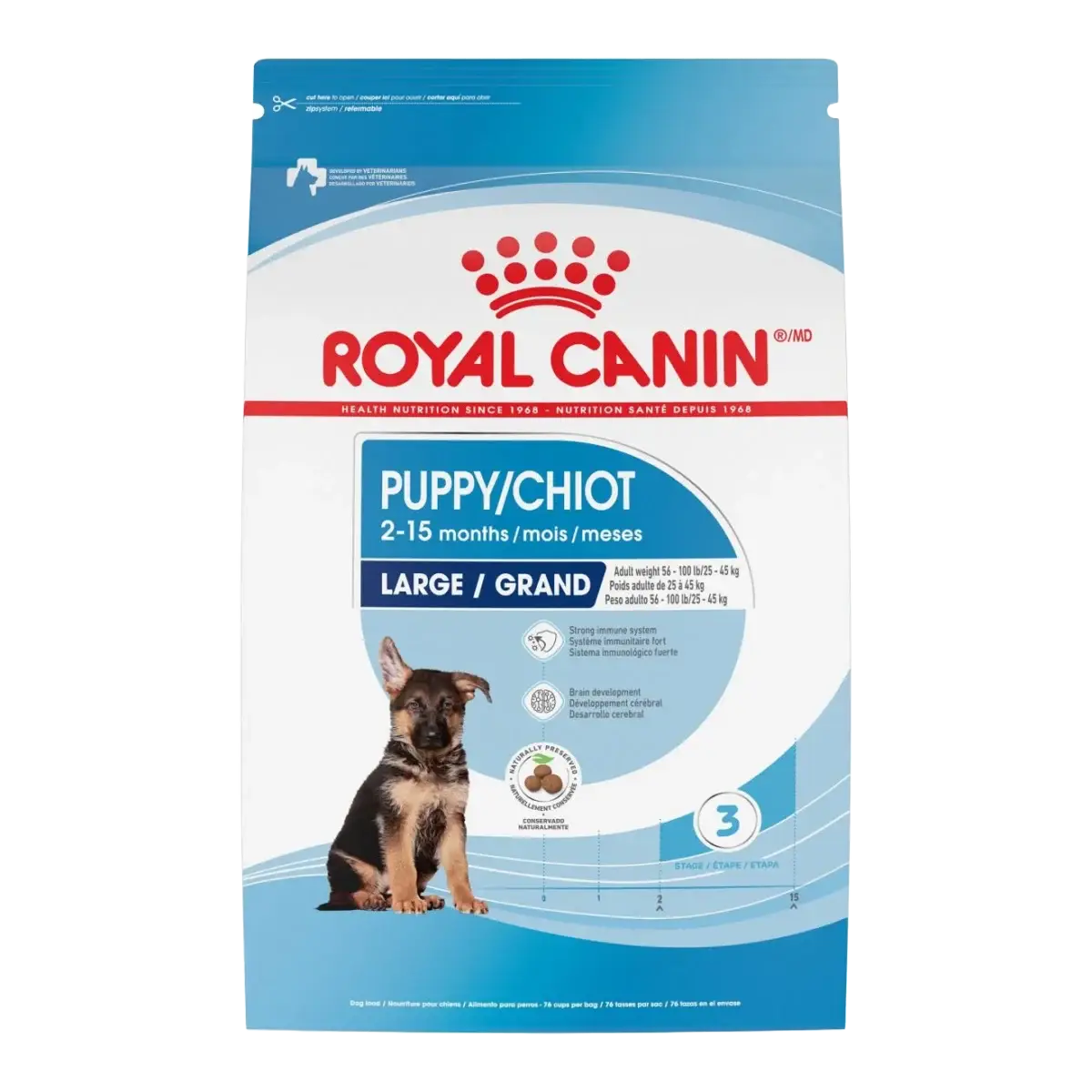
Number three on our recommended list is Royal Canin. This is one of the more expensive brands we reviewed, and it is a food we tend to recommend for puppies with specific dietary needs. Many veterinarians regularly suggest Royal Canin, and we agree that it is a high quality product.
That said, Royal Canin does come with one of the highest prices per pound on our list. If your puppy has a sensitive stomach or requires a specialized diet, this brand is absolutely worth considering. It is a solid option when health needs are the top priority.
For puppies without any known dietary or health concerns, we generally recommend one of the other brands on our list due to the higher cost. Royal Canin is an excellent food, but for most puppies, there are more cost effective choices that still provide outstanding nutrition.
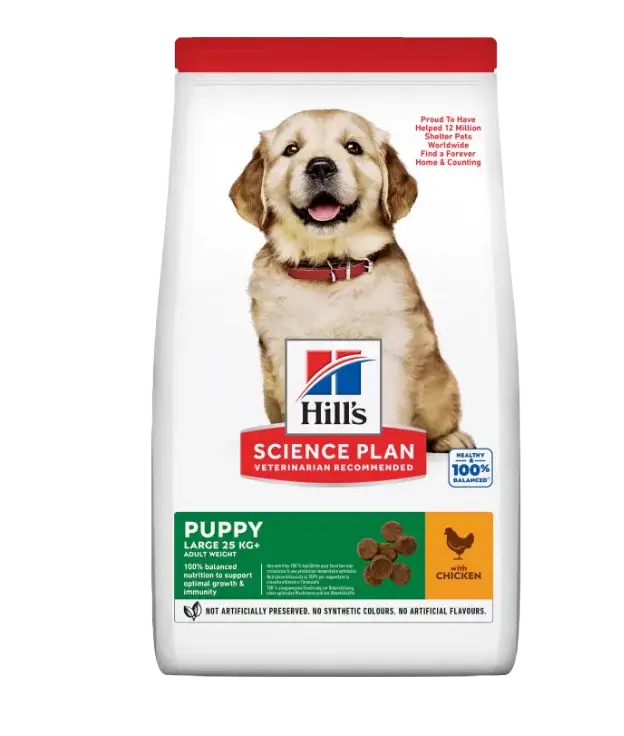
Coming in at number two on our recommended list is Hills Science Diet. We have been feeding Science Diet to our dogs for more than 12 years and have been very happy with the results overall. It is a consistent, reliable brand that delivers good quality nutrition at a reasonable price point.
From a cost standpoint, Science Diet sits comfortably in the mid range. It strikes a nice balance between quality and affordability, which is one of the reasons it has been a long time favorite for many dog owners. It is also a brand that our veterinarians regularly recommend, which adds another layer of confidence.
That said, we recently made the decision to transition our dogs from Science Diet to the number one brand on our list.
And yes… drum roll please.
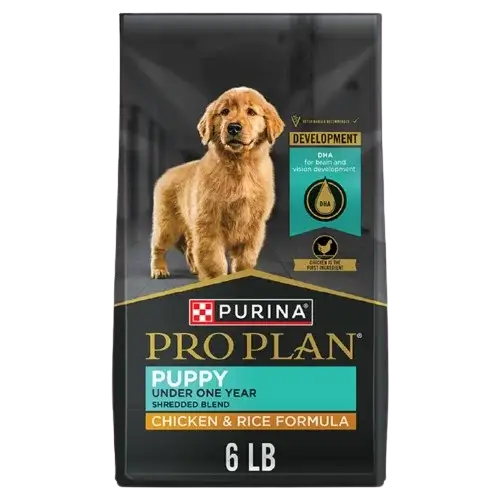
Our number one puppy food recommendation is Purina Pro Plan. This brand was previously known as Purina Focus, and it quickly became our top choice for several reasons.
Pro Plan offers high quality nutrition with well balanced ingredients at a more reasonable price point than Science Diet. While cost was part of the decision, it was not the main reason we made the switch. During the pandemic and the supply chain challenges that followed, we often struggled to find Science Diet when we needed it. That was not the case with Pro Plan.
Even when shelves were thin, we were consistently able to find Pro Plan either locally or online. We never ran out, which matters when you are feeding growing puppies and adult dogs.
Another major factor was veterinary input. We work with multiple veterinarians for our dogs for different needs, and Pro Plan was the only puppy food that appeared on every vet’s recommended list. Between availability, price, and consistent veterinary endorsement, Pro Plan stood out as the most practical and reliable option for us.
So there you have it. Those are our recommendations for choosing a quality Labrador puppy food and our top three brand picks based on years of hands on experience raising Labradors.
If you ever have questions about feeding your puppy or transitioning foods, we are always happy to share what has worked well for us.
